
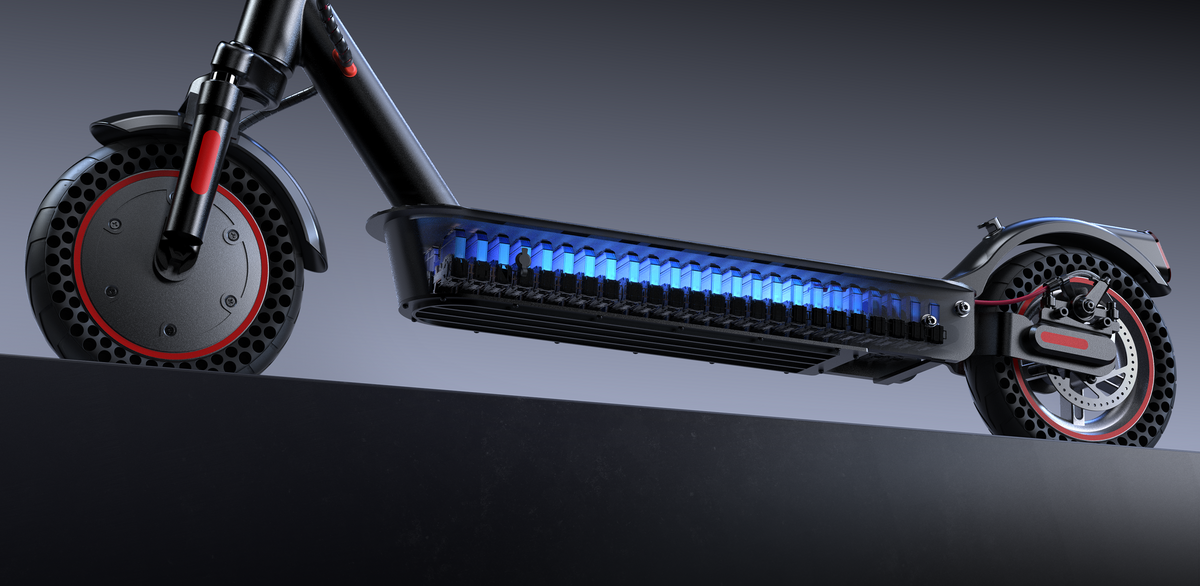
An e-scooter battery never complains. It just quietly loses range, season after season, until one day your usual rides feel noticeably shorter. The good news is that most of that wear is avoidable. Once you know how to charge an electric scooter battery UK riders can rely on, and how to store it while the scooter sits idle, you can add real time to the life of any rechargeable scooter.
This guide covers everyday charging habits, storage for a few days or a few months, winter care, and the warning signs worth acting on. None of it needs special tools. It's just a handful of habits that soon feel automatic.
How to Charge an Electric Scooter Battery UK Riders Can Trust
Charging is simple once you follow the same four steps every time.
Step 1: Use the Charger from the Box
Start with the charger that came with your scooter. It's matched to your battery's voltage and current, and that pairing does more for battery health than any clever trick.
Step 2: Choose a Safe Charging Spot
Where you charge matters too. Look for a spot that is:
-
Hard, dry, and uncluttered, such as a tiled floor or workbench
-
Away from curtains, bedding, and stacked boxes
-
Clear of walkways and exits, with the cable kept out of the way
-
At room temperature, not a freezing garage or next to a radiator
Never cover the charger while it's working.
Step 3: Let the Battery Cool After a Ride
After a ride, let the battery cool for a while before you plug in. A warm pack doesn't need to start charging straight away.
Step 4: Plug In and Allow a Few Hours
Expect a full charge to take a few hours. iScooter lists 4 to 6 hours for both of these models:
Real times shift with temperature and with how flat the battery was when you started.
In the UK, privately owned electric scooters are limited to private land, so most riding happens close to home. That makes it easy to pick one safe charging spot and use it every time.
Getting Full Charges Without Overcharging
Lithium batteries are a bit like people at a buffet. They're happiest somewhere between hungry and stuffed. Running one down to zero stresses the cells, and so does sitting at 100% for long stretches.
For everyday use, top up little and often. Recharge when the display shows around 20 to 30%, rather than waiting for the scooter to cut out. If you won't need the full range tomorrow, unplugging at 80 to 90% is kind to the cells.
That said, don't avoid full charges altogether. Fill it up before a longer ride, and now and then even if you don't strictly need to. Many scooters use a battery management system that balances the cells during a full charge, so the occasional complete top-up keeps the pack even. Your manual will confirm what suits your model.
Most modern packs also stop charging once they're full, but a protection circuit is a backup, not a plan. Unplug once the light shows the charge is complete.
How to Store an Electric Scooter Battery in the UK: Days vs Months
The right approach depends on how long the scooter will sit.
A few days
Nothing special is needed. Leave the battery as it is, as long as it isn't close to empty, and keep the scooter indoors and dry. Skip the charger until you're about to ride again.
A few weeks to a few months
This is where being deliberate pays off. If you want to know how to store an electric scooter battery UK weather won't punish, the rule is half full, dry, and indoors. In practice:
-
Charge to roughly 40 to 60%, not full and not nearly empty.
-
Keep it somewhere cool and dry, out of direct sun and away from heaters.
-
Stand the scooter off damp floors.
-
Check the charge every month or two and top back up to half if it has dropped.
That last step matters. Batteries lose charge slowly even when switched off, and one left flat for months may not accept a charge again.
Electric Scooter Winter Storage UK: What Changes When It's Cold
Cold changes two things: how the battery performs and where it should live. Expect a shorter range on chilly days. The dip is normal and usually recovers once the battery warms up.
The best electric scooter winter storage UK households can manage is simply indoors. A hallway, spare room, or cupboard under the stairs beats an unheated shed or garage, where temperatures can hover near freezing for weeks. Two habits help further:
-
Never plug in a frozen battery. If the scooter has been somewhere very cold, bring it inside and give it a few hours to reach room temperature first.
-
Watch for condensation. A cold scooter carried into a warm room can end up damp. Dry the charging port and let it sit before plugging in. The iScooter i8 lists IP54 water resistance, which covers splashes rather than soaking, so wipe it down after damp rides.
Anyone shopping for an electric scooter with a removable battery UK seller's list should check the spec sheet first, because plenty of folding scooters have the battery built into the frame. If yours does come out, winter is easier: keep the pack indoors at around half charge while the scooter waits elsewhere. If it doesn't, bring the whole scooter in and follow the half-charge rule and monthly check from the last section.
Signs Your Rechargeable E-Scooter Battery Needs Attention
Batteries age gradually, so watch for changes rather than sudden failure. Signs to look for:
-
Range that has dropped noticeably on your usual rides, even after a full charge
-
Charging that finishes much faster or slower than it used to
-
The scooter cutting out at a charge level that used to be fine
Those three usually mean the battery is simply getting older, so talk to the seller about a check. Heat, a strange smell, hissing, or a swollen battery casing are different. If you notice any of them, stop using the scooter, unplug it if that's safe to do, and move it away from anything flammable, ideally outdoors. Don't open the pack yourself.
For iScooter owners, the warranty, support and promise to UK riders guide explains how to get help.
Wrapping Up
Good battery care comes down to a few repeatable habits. Charge with the supplied charger in a dry, clear spot. Top up little and often and give it a full charge now and then. Store it around half full and indoors and check on it monthly if it's resting for the winter. Pay attention when the range, charge time, or temperature starts to change.
Do that, and your rechargeable scooter should stay dependable for far longer. If you're weighing up which model suits your riding, browse the essential electric scooters collection to compare battery sizes and listed charging times.
FAQs
Is it bad to leave an electric scooter on charge overnight?
An occasional overnight charge is unlikely to harm the battery, since most scooters stop charging when full. Safety is the bigger concern. UK fire services generally advise against charging while you're asleep or out of the house. With a 4-to-6-hour charge time, it's easy to plug in while you're home and awake, then unplug when it's done.
Can I use a third-party charger with my iScooter?
Stick with the supplied charger, or a replacement through iScooter support. The charger is matched to the battery's voltage, current, and connector, and a mismatched one can charge poorly or overheat the pack. It may also affect your warranty, so ask for support before buying anything else.
Does cold weather permanently damage an e-scooter battery?
Cold on its own usually causes only a temporary range drop. Lasting damage is more likely when a battery is charged while frozen or left nearly flat all winter. Let it warm up before charging and store it at about half.
Share:
Is Your Electric Scooter Weatherproof? What IPX Ratings Actually Mean
Off-Road Electric Scooter Accessories Worth Adding to Your Setup