
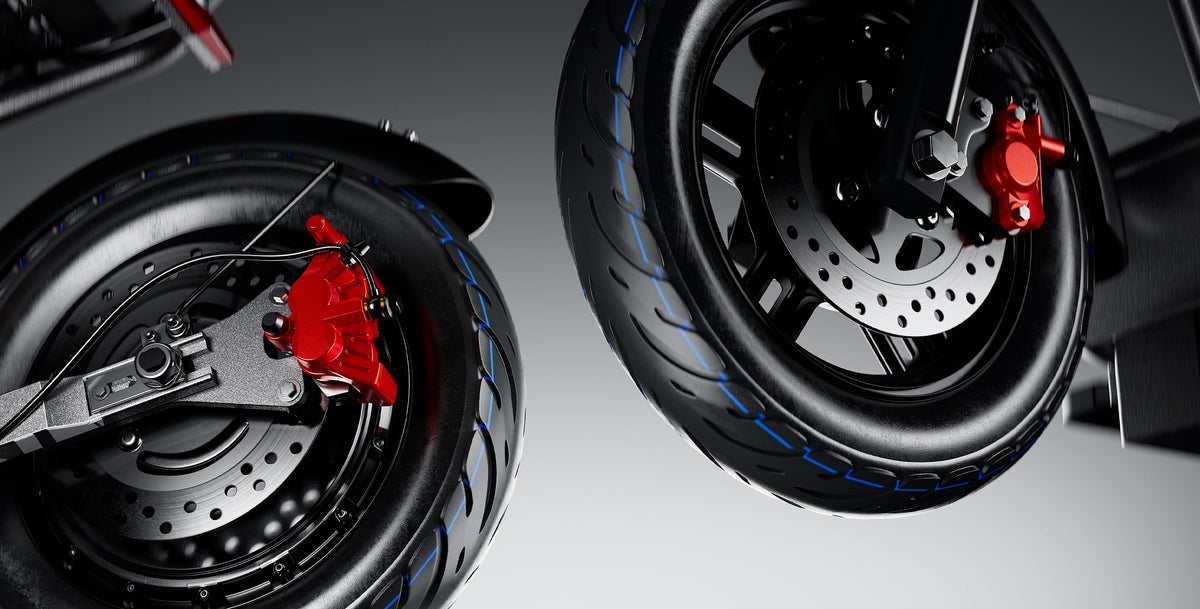
If you've ever pulled your scooter out of the shed after a muddy weekend and noticed the tread looking sadder than it should, you already know why off-road electric scooter tyre maintenance matters. Off-road tyres do a lot more work than their standard counterparts; they're constantly gripping loose gravel, pushing through mud, and absorbing impacts that would flatten a smooth tyre in no time.
A little regular care goes a long way toward keeping your rides smooth, safe, and free of unexpected walks home. This guide walks through the essentials: what to check before every ride, how to spot early wear, the difference between pneumatic and tubeless setups, and when it's time to stop patching and start replacing.
Off-Road Electric Scooter Tyre Maintenance: Why It Matters More Than on Everyday Models
Standard electric scooter tyres are built for flat, predictable surfaces. Off-road tyres are a different animal entirely. They're deeper-treaded, often wider, and designed to flex over rocks and roots rather than roll straight over them. That flexing and gripping puts extra strain on the rubber, the sidewalls, and if you're running pneumatic tyres, the air pressure inside.
Neglect this side of ownership and the consequences show up fast: reduced grip on loose terrain, sluggish handling, and a much higher chance of a puncture mid-trail. Treat tyre care as part of your regular routine rather than an afterthought, and your scooter will reward you with better traction and a longer-lasting set of tyres.
Tyres don't work in isolation either. They're part of a wider safety setup, as explained in iScooter's guide on how iScooter engineers suspension, brakes and balance for safer UK rides.
Checking Pressure and Tread Before Every Ride
Tyre pressure is the single easiest thing to get wrong, and it affects almost everything else about how your scooter handles. Too much air and you lose grip on loose or uneven ground. Too little and you risk pinch flats, along with extra wear on the sidewalls.
Before heading out, a quick two-minute check makes a real difference:
-
Squeeze or gauge the tyres to confirm they're within the manufacturer's recommended range
-
Look over the tread for embedded stones, thorns, or glass
-
Check for any visible bulges or soft spots along the sidewall
For a fat tire electric scooter in particular, pressure matters even more, the wider surface area means small changes in PSI have a bigger effect on how the tyre absorbs bumps. Get into the habit of checking before you ride, not after something's already gone wrong.
Spotting Wear From Mud, Gravel and Rough Terrain Early
Terrain that gives you the most fun: loose gravel, wet mud, uneven trails is also what wears tyres down fastest. The trick is catching the early signs before they turn into a full-blown problem.
Keep an eye out for:
-
Uneven tread wear, which often points to incorrect pressure or an alignment issue
-
Small cuts or nicks picked up from sharp stones or debris
-
Flattening tread patterns, where the once-deep grooves start looking noticeably shallower
A fat tire scooter tends to show wear a little differently than a narrower model because more rubber is in contact with the ground, wear can look gradual at first, then seem to appear all at once. Running your hand across the tread every few rides (not just glancing at it) helps you catch changes before they affect grip.
Pneumatic vs Tubeless — What the iX7Pro's Tyres Need
Not all off-road tyres are built the same way, and how you look after them depends on which type you've got.
Pneumatic tyres
The traditional air-filled type offers excellent shock absorption and a genuinely comfortable ride over rough ground. The trade-off is that they need regular pressure checks and are more susceptible to punctures if you roll over something sharp.
Tubeless tyres
Skip the inner tube entirely, which cuts down on pinch flats and simplifies things slightly, though they still need occasional pressure top-ups and a watchful eye for slow leaks.
The iX7Pro's tyres are built specifically to handle mixed, unpredictable terrain, so whichever version you're running, don't skip the basics: pressure checks, tread inspections, and a general once-over after any particularly rough outing. For full specs and guidance on what pressure range suits your model, iScooter's iX7Pro technical specifications page is worth bookmarking.
When to Repair vs Replace
Every tyre eventually reaches a point where patching it up stops being worth the effort. Knowing where that line sits saves you from a nasty surprise mid-ride.
Repair is usually fine when:
-
The puncture is small and located centrally on the tread
-
Tread depth still looks reasonably deep
-
There's no visible damage to the sidewall
Replacement is the safer call when:
-
You're dealing with sidewall cuts or bulges
-
Tread has worn down significantly or looks smooth in patches
-
You've already repaired the same tyre more than once
If you're regularly riding an off road fat tire electric scooter over genuinely rough ground, budgeting for a tyre replacement every so often just comes with the territory. Trying to stretch a worn set too far tends to cost more in the long run, both in performance and in the risk of getting stuck somewhere inconvenient.
Keep Your Tyres Ready for Every Ride
Looking after your off-road electric scooter tyres doesn't take much time, but it makes a genuine difference to how your scooter handles and how long your tyres actually last. Get into a simple routine: check pressure before you ride, inspect the tread regularly, and know when it's time to repair versus replace and you'll spend a lot less time worrying about your tyres and a lot more time enjoying the ride. For a fat tire electric scooter UK riders can rely on over rough terrain, that small bit of upkeep goes a long way.
FAQs
Can I ride an off-road electric scooter with a slow puncture?
Technically yes, but it's not a great idea. A slow puncture gradually reduces your pressure mid-ride, which affects handling and increases strain on the sidewall. It's best to sort it out before your next outing rather than pushing your luck.
How often should I check the tyre pressure on an off-road electric scooter?
A quick check before every ride is ideal, especially if you're covering varied terrain. At minimum, aim for a proper check once a week if you're riding regularly.
Do the iX7Pro's tubeless tyres need different care than pneumatic ones?
The core habits such as checking pressure and inspecting the tread apply either way. Tubeless setups are somewhat more puncture-resistant, but they still benefit from the same regular attention as pneumatic tyres.
Share:
Why We Build iScooters to Last: Warranty, Support and Our Promise to UK Riders
Off-Road Electric Scooter Battery Care: Common Issues and Fixes