
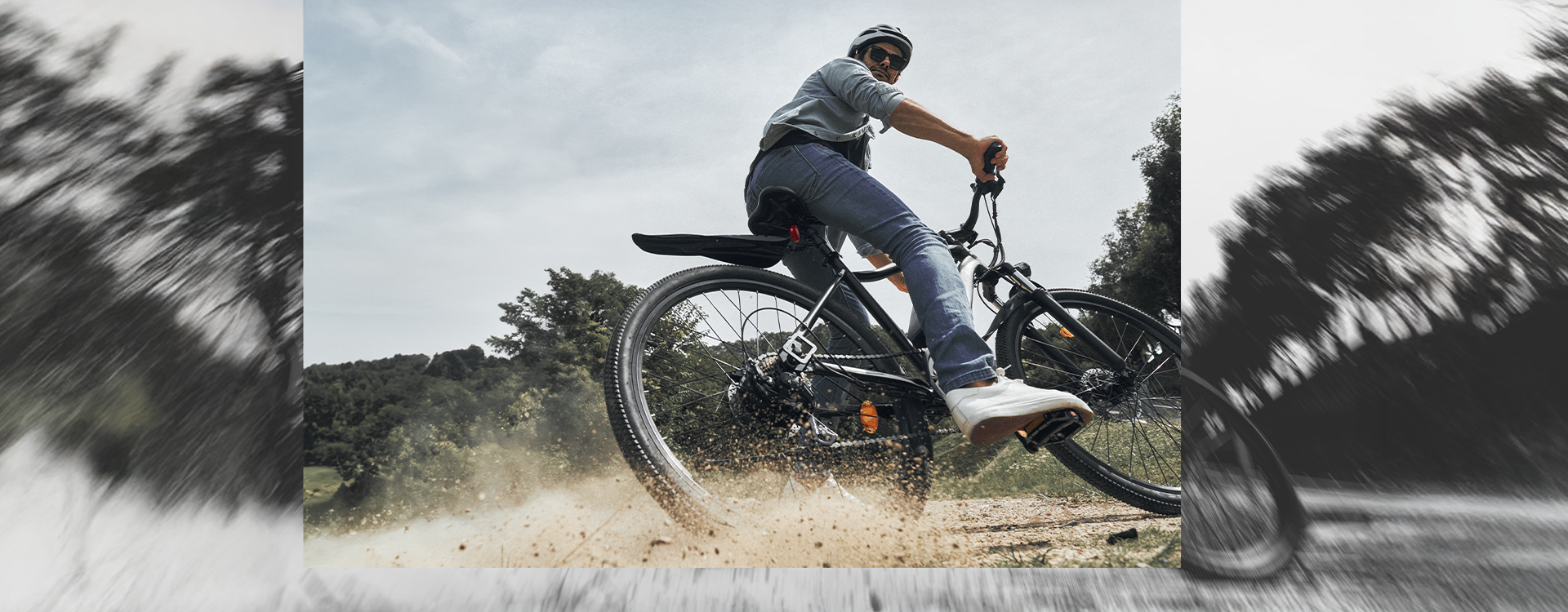
What Makes an Electric Mountain Bike Different From a Standard E-Bike?
At first glance, an electric mountain bike and a city e-bike might look similar: two wheels, a battery, a motor. But the similarities mostly stop there.
E mountain bikes UK riders buy are built around off-road demands. That means reinforced frames, wider knobby tyres for grip on loose surfaces, and suspension systems designed to soak up roots, rocks, and ruts rather than just the odd pothole. The motor placement matters too.
Most electric mountain bikes use a mid-drive or hub motor tuned for torque rather than raw top speed, since climbing a muddy incline takes a very different kind of power delivery than cruising along a flat commute.
Standard e-bikes, by contrast, are optimised for comfort and efficiency on paved roads. Put one on a technical trail and you'll likely find the geometry awkward, the tyres slipping, and the frame stressed in ways it was never designed for. If you're serious about trail riding, an electric mountain bike for adults built specifically for the terrain is the safer, longer-lasting choice.
Hardtail vs Full Suspension: Which Electric MTB Suits You?
This is usually the first real decision buyers face, and it comes down to where you actually plan to ride.
Hardtail electric mountain bikes
Have front suspension only, with a rigid rear end. They're lighter, easier to maintain, and generally more affordable which is part of why so many people searching for the best hardtail e bike UK end up choosing one as their first e-MTB. Hardtails are great for gravel paths, moderate bridleways, and mixed terrain where you're not constantly hammering over rock gardens.
Full suspension models
Add rear shock absorption, smoothing out rougher, more technical trails. They're more forgiving on your back and wrists over long rides, but that extra hardware adds weight, cost, and more parts that eventually need servicing.
A simple way to decide: if your rides mostly involve towpaths, forest tracks, and the occasional rutted trail, a hardtail will serve you well and keep more cash in your pocket. If you're chasing steeper, rockier singletrack most weekends, the extra suspension starts to earn its keep.
Electric Mountain Bike UK Rules Riders Should Know
Here's where things get genuinely important, because getting this wrong can mean an invalid insurance claim or even a fine.
To be classed as a road-legal EAPC (Electrically Assisted Pedal Cycle) in the UK, an e-bike including electric mountain bikes must meet a few specific conditions:
-
The motor must have a maximum continuous power rating of 250W.
-
Motor assistance must be cut out once you reach 15.5 mph; after that, it's pedal power only.
-
You must be at least 14 years old to ride one on public roads or bridleways.
-
The bike must have working pedals that can propel it on their own.
If a bike exceeds these limits, say, a 750W motor with no speed cut-off it's legally treated more like a moped, which means you'd need a licence, insurance, tax, and a helmet that meets motorcycle standards to ride it anywhere public.
As for where you can actually ride: EAPC-compliant electric mountain bikes are permitted on bridleways and byways open to all traffic, the same as a standard mountain bike. Public footpaths are a different story. Cycling of any kind, electric or not, generally isn't allowed there unless signage says otherwise.
Choosing the Right Motor and Battery for Hills
If hills are the whole reason you're upgrading to electric power, motor torque and battery capacity deserve more attention than top speed ever will.
Torque
Measured in Newton-metres (Nm), it tells you how much pulling power the motor delivers at low speeds which is exactly what you need when you're grinding up a steep incline rather than cruising on the flat. Look for a best electric bike for hills UK shoppers would actually recommend, meaning one with strong low-end torque and multiple pedal-assist levels so you can dial in exactly how much help you want.
Battery
Battery capacity is usually listed in watt-hours (Wh), which determines how far you'll get before needing a recharge and hill climbing drains a battery noticeably faster than flat riding does.
Whichever model you consider, check the claimed range against realistic conditions; manufacturer figures are often based on flat terrain and minimal assist, so knock off a decent chunk if your rides involve regular climbing.
Is an Electric Mountain Bike Right for Your Next Ride?
For a lot of riders, the answer comes down to how often hills or long distances currently stop them from riding as much as they'd like. An e-MTB doesn't replace the skill or fitness that mountain biking builds, but it does flatten out the parts of a ride that used to mean turning back early or avoiding certain routes altogether.
If you're weighing up your first electric MTB UK purchase, start by being honest about your terrain and how often you'll actually use it. A capable hardtail with solid torque and a dependable battery will cover most UK trail riding without overcomplicating things and it's a sensible place to start before considering pricier full-suspension setups.
FAQs
Do I need a licence to ride an electric mountain bike on UK trails?
No, as long as the bike qualifies as an EAPC. Meaning a 250W motor that cuts assistance at 15.5 mph. You don't need a licence, registration, insurance, or road tax to ride one on public roads or permitted bridleways, the same as a regular pedal bike.
What's the difference between a legal EAPC e-bike and a full-power electric motorbike?
An EAPC is capped at 250W with assistance stopping at 15.5 mph, and it must still be pedalled. A full-power electric motorbike can exceed those limits and provide throttle-only propulsion at higher speeds, which legally puts it in the same category as a moped, requiring a licence, insurance, and registration to use on public land.
How much heavier is an electric mountain bike than a standard MTB?
Most electric mountain bikes add somewhere between 8 and 12 kg compared to an equivalent non-electric MTB, largely due to the motor and battery. Lighter models, built with more compact battery packs, help narrow that gap without sacrificing much range.
Share:
Inside the iScooter iX7Pro: What 1000W Dual-Motor Power Really Means Off-Road