
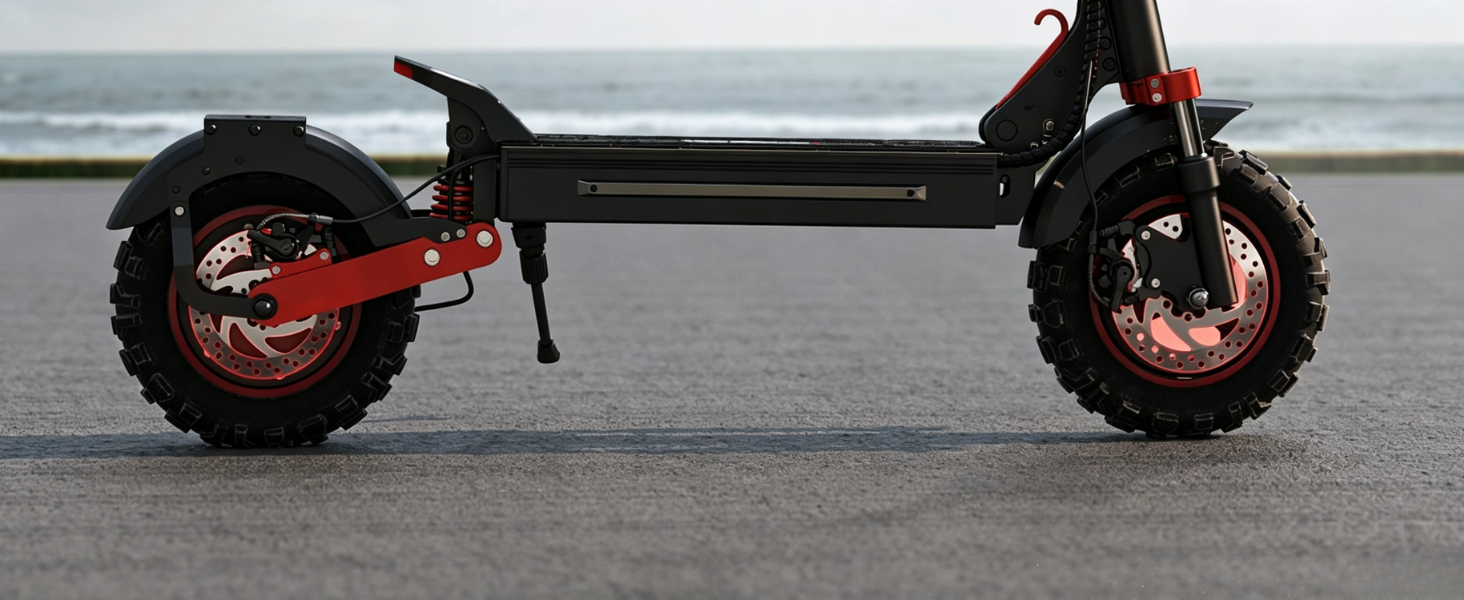
If you've noticed more knobbly tyres and beefed-up suspension on the trails lately, you're not imagining it. The off road electric scooter UK market has quietly become one of the fastest-growing corners of personal transport, and it's not just teenagers chasing thrills.
Commuters, weekend explorers, and even dog walkers are trading in their standard city scooters for something that can handle mud, gravel, and the occasional pothole without flinching. So what's actually behind this shift, and is an off-road model worth the extra investment? Let's break it down.
What's Driving the UK's Off-Road E-Scooter Boom?
A few things have lined up at once.
-
First, more people are working hybrid schedules, which means fewer daily commutes and more weekend rides purely for fun.
-
Second, UK trail networks. From converted railway paths to countryside bridleways, have become genuinely popular weekend destinations, and riders want a vehicle that can keep up.
-
Third, battery and motor technology has matured enough that an off road e scooter no longer feels like a compromise. Ten years ago, "off-road" often just meant slightly thicker tyres bolted onto a commuter frame. That's changed.
There's also a practical angle. British weather is unpredictable at the best of times, and a scooter built only for smooth tarmac tends to struggle the moment the pavement turns to gravel or a light rain slicks the path.
Riders who've been caught out by a standard scooter skidding on wet leaves or getting stuck in a rutted trail are often the ones searching for the best off road electric scooter UK shoppers actually recommend, not just the flashiest spec sheet.
Off-Road vs Commuter: How the Two Categories Differ
It's tempting to assume any electric scooter can handle a bit of rough ground, but the engineering tells a different story. Commuter scooters are built around efficiency on flat, predictable surfaces, while an all terrain electric scooter is built from the ground up for unpredictability. Here's how the two stack up side by side:
|
Feature |
Commuter Scooter |
Off-Road / All-Terrain Scooter |
|
Frame & weight |
Lighter, foldable, easy to carry |
Heavier, sturdier build, less portable |
|
Wheels & tyres |
Smaller, low-resistance tyres |
Wider, deep-tread tyres for grip |
|
Suspension |
Minimal or none |
Dual front-and-rear suspension |
|
Motor |
Lower power, tuned for efficiency |
Higher torque, built to push through resistance |
|
Braking |
Standard electronic or disc brake |
Combined disc and electronic braking for shorter stops |
|
Best suited for |
Pavements, bike lanes, daily commuting |
Trails, gravel, mud, and uneven ground |
The gap really comes down to what each design is optimised for. A commuter scooter shaves off weight and bulk so it's easy to fold and carry onto a train, but that same lightness leaves very little margin once the terrain turns rough. An off-road model accepts the extra size and weight as the cost of staying stable and controllable off the beaten path.
What to Look for in a Genuine All-Terrain Scooter
Not every scooter marketed as "off-road" actually earns the label. Here's what separates the real deal from a commuter scooter with a rugged paint job:
Tyres
Confirm it's a genuine fat tire electric scooter with pneumatic (air-filled) tread, not just a wider solid-rubber tyre. Air-filled tyres absorb shock properly, though they do need occasional pressure checks.
Motor power
Anything under 500W will struggle on inclines or soft ground. Most capable off-road scooters sit in the 800W to 1000W range, with dual-motor options available for steeper trails.
Ground clearance
A few extra centimetres between the deck and the ground can be the difference between clearing a root or rock and getting hung up on it.
Water resistance
An IP54 rating or higher is worth prioritising if you're riding after rain, since trail conditions rarely stay dry for long.
It's also worth checking the battery's real-world range rather than the marketing figure, since off-road riding drains power faster than a flat commute. A scooter rated for 30 miles on smooth tarmac might realistically deliver closer to 20 once you factor in mud, inclines, and colder weather.
Where UK Riders Are Taking Their Off-Road Scooters This Summer
Part of what's fuelling demand is simply having somewhere good to ride. From converted rail trails to coastal paths, here's where off-road riders are heading this season and what to keep in mind before you go.
Rail Trails and Forest Tracks
Converted rail trails like the Camel Trail in Cornwall and the Mawddach Trail in Wales have become popular with scooter riders looking for a scenic, mostly flat surface with just enough texture to justify the suspension. Forest tracks in areas like the New Forest and Sherwood also draw a steady stream of weekend riders, though it's worth double-checking local byelaws before heading out, since rules on private versus public land can vary significantly.
Coastal Paths
Coastal paths are another favourite, particularly ones with a mix of packed sand and gravel. That combination is exactly where a fat-tyre setup earns its keep, standard tyres tend to bog down almost immediately on soft sand, while a wider, knobblier tyre keeps rolling.
iScooter's Take on the Off-Road Trend
At iScooter, we've watched this shift happen in real time through the questions our customers ask. A few years ago, most enquiries were about range and folding size. Now, a growing number of riders want to know how a scooter handles wet grass, loose gravel, or a steep bridleway climb.
That's shaped how we think about our off-road lineup: prioritising genuine dual suspension, proper pneumatic tyres, and motors with the torque to handle UK trail conditions rather than just looking rugged on paper.
If you're weighing up your options, our off-road electric scooter range is a good place to compare models side by side, from entry-level trail scooters through to higher-powered options built for steeper, more demanding terrain.
Whatever you choose, the underlying trend seems set to continue. As more riders discover how much of Britain's countryside opens up once you're not limited to pavement, the gap between "commuter scooter" and "off-road scooter" is only going to matter more.
FAQs
Are off-road electric scooters legal to ride in UK woodland or parks?
It depends on who owns the land. Private electric scooters aren't currently permitted on public roads, pavements, or public parkland in the UK. They're legal to ride on private land where you have the landowner's explicit permission, which is why many off-road riders stick to private trail networks or estates that welcome scooters.
What tyre type is best for muddy or gravel trails?
Pneumatic (air-filled) tyres with a deep, knobbly tread generally perform best on mud and gravel. The air cushioning absorbs impact from uneven ground, while the wider tread pattern bites into loose surfaces for better grip. Solid rubber tyres are more puncture-proof but tend to feel harsh and lose traction quickly once the ground gets soft.
Do off-road scooters need more maintenance than commuter models?
Generally, yes, though not dramatically so. Riding through mud, water, and debris means tyres, brakes, and suspension components pick up more wear, so it's worth checking tyre pressure and cleaning the frame after muddy rides. A quick post-ride wipe-down and periodic suspension check go a long way toward keeping an off-road scooter running smoothly.
Share:
Inside the iScooter iX7Pro: What 1000W Dual-Motor Power Really Means Off-Road
The Future of Micromobility: How Electric Scooters Are Reshaping UK Travel