
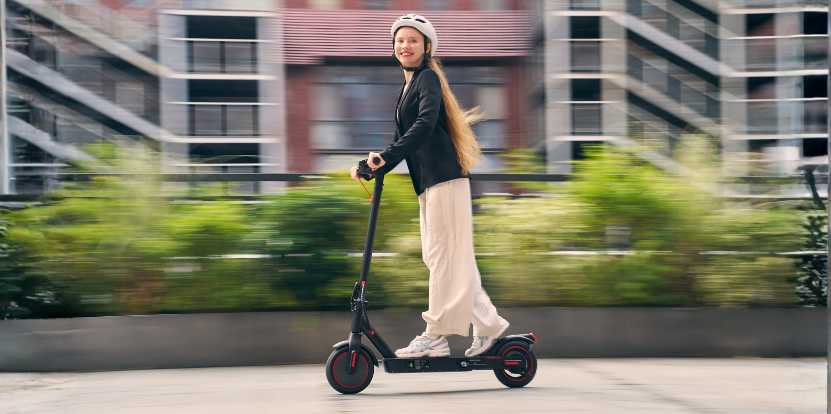
If you've typed "e-scooter London legal" into a search bar recently, you're not alone. It's one of the most confusing corners of UK transport law, and London's rules add an extra layer that trips up even long-time riders. The short version: it depends entirely on whether you're renting or riding your own.
Below, we'll break down exactly what's allowed, why London often feels stricter than other parts of the country, and what you can do if you want to enjoy an electric scooter without any grey areas.
E-Scooter London Legal Status: The Short Answer
Here's the headline answer to whether an electric scooter is legal in London: rental e-scooters booked through an approved trial operator are legal to ride on public roads and in cycle lanes across participating boroughs. Privately owned e-scooters are not. That's true everywhere in the UK, not just the capital, but London gets extra attention because it has one of the largest and most visible trial schemes in the country.
Under the Road Traffic Act 1988, an e-scooter counts as a "motor vehicle." That single classification is the root of almost every rule that follows. Motor vehicles used on public roads normally need registration, insurance, an MOT, and a valid licence. Standard consumer e-scooters can't meet those requirements, which is why private electric scooters remain illegal in the UK outside of government-sanctioned trials, no matter how well-built or feature-packed they are.
So when people ask if an electric scooter is illegal in London, the honest answer is: your own scooter, yes, on public roads and pavements. A trial rental scooter, no. It's a distinction that catches a lot of newcomers off guard, especially visitors who've used private scooters legally in other countries.
TfL Rental Trials vs Privately Owned Scooters
The TfL e-scooter rental trial in London is currently the only legal way to ride an e-scooter on the capital's streets. It launched in 2021 and runs in partnership with London Councils across a set list of participating boroughs, with Lime and Voi currently operating the fleets.
Here's where the confusion usually starts. A rental scooter and a privately owned one can look almost identical, but only one of them is operating within the law. The table below lays out exactly how the two compare.
|
|
TfL Rental Trial Scooter |
Privately Owned Scooter |
|
Legal on public roads? |
Yes, within participating boroughs |
No, anywhere in the UK |
|
Legal on pavements? |
No |
No |
|
Speed limit |
Capped at 12.5mph |
Not applicable, riding isn't permitted |
|
Who can use it |
Riders 18+ with a valid provisional or full driving licence |
N/A, cannot be used on public land regardless of age or licence |
|
Insurance |
Covered under the operator's trial insurance |
None available for public road use |
|
Safety tech |
Geofencing, always-on lights, speed limiters |
Varies by model, none of it makes public riding legal |
|
Where it can be used |
Roads and cycle lanes in the trial area |
Private land only, with the landowner's permission |
The trial has been extended multiple times while the government works out permanent legislation. The most recent extension pushes the national scheme out to May 2028, and as of the last King's Speech, no dedicated e-scooter law had been introduced. That means the current patchwork of rules in the table above is likely to stay in place for a while yet. The vehicle itself isn't the problem; the ownership and registration status is what determines whether it's legal.
Why London's Rules Feel Different From Other UK Cities
London isn't unique in banning private e-scooters. That rule is national. What makes the capital feel different comes down to scale and enforcement.
A Larger, More Visible Rental Fleet
Because London's rental fleet is so large and so visible, riders sometimes assume any scooter on the street must be operating legally. Other towns with smaller or no trial schemes don't have this visual overlap, so the legal picture there can feel more black-and-white.
Stricter Geofencing in Practice
London enforces "no-go" and "go-slow" zones through geofencing technology built into rental scooters, something most smaller trial areas apply less extensively. If a rental scooter enters a restricted zone, it will automatically stop or slow down.
Higher Visibility Means More Enforcement
London's transport network is dense enough that private scooter use gets noticed and reported more often. Local authorities and the police here have specifically flagged fire risks from poorly made lithium-ion batteries in privately owned scooters, which has made enforcement of the private-use ban a more visible priority in the capital compared with quieter regions.
What Happens If You're Caught Riding Privately in London
Do police in London actively enforce e-scooter rules? Enforcement varies by borough and by officer discretion, but it does happen, and the penalties aren't trivial. Riding a privately owned e-scooter on a public road, cycle lane, or pavement can result in a fine, penalty points on your driving licence, and the scooter itself being seized. If your scooter is impounded, retrieving it typically involves an additional release fee on top of any fine, which can add up quickly.
It's worth repeating that private e-scooters are legal to use on private land, with the landowner's permission. A large private garden, farmland, or a business site you have permission to use are all fair game. What's off-limits is anywhere the public has a right of way: pavements, parks with public paths, and any road, however quiet it looks.
Riding Your iScooter Legally, Wherever You Live
None of this means owning a personal electric scooter is pointless while UK legislation catches up. Plenty of riders get genuine, everyday value out of a well-built model on private land, at events, on large estates, or simply for essential short trips around spaces where they have permission to ride. If you're weighing up which model suits that kind of use, it's worth taking a look at iScooter's full electric scooter range to compare battery life, build quality, and safety features side by side before you buy.
Whatever you choose, keep an eye on where you're actually allowed to use it. The law in this area is still evolving, and the safest approach is to treat any public road, cycle lane, or pavement as off-limits for a privately owned scooter until national legislation says otherwise.
FAQs
Are rental e-scooters in London the same as privately owned ones?
Not legally. Rental scooters are registered to an approved trial operator, insured, and fitted with safety features like speed limiters and geofencing. A privately owned scooter has none of that regulatory backing, which is why only the rental version is currently permitted on public roads.
Can I ride my own electric scooter in a London park?
Generally no, if the park has public paths that count as a public place. The private-use ban applies to any space the public has a right to access, not just roads. Some private land within a park boundary may be an exception, but this depends entirely on ownership and permission.
Will London get its own separate e-scooter law before the rest of the UK?
There's no indication of that so far. E-scooter legislation is being handled at a national level through the Department for Transport, and London's trial operates under the same national framework as every other participating area in the UK. Any future law change would apply UK-wide rather than to London alone.
Share:
Where You're Legally Allowed to Ride an Off-Road Electric Scooter in the UK
Will Private Electric Scooters Become Legal in the UK? What's Being Proposed