
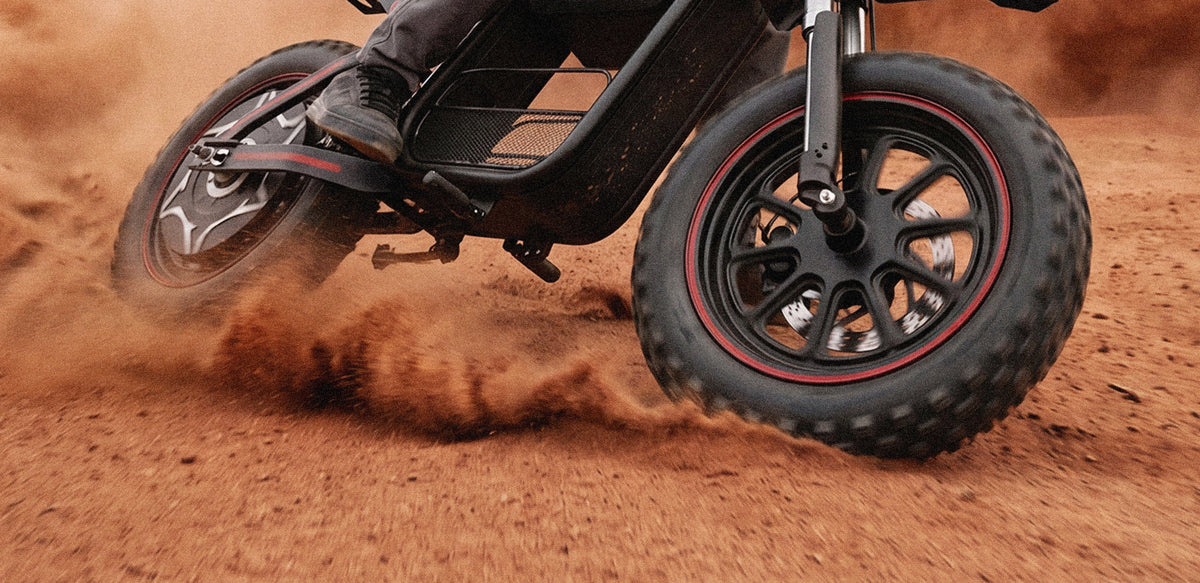
Rugged tyres and a beefy motor might make an off road electric scooter for adults feel like it belongs on a trail, but the law doesn't see it that way. Whether you're eyeing a lightweight commuter-style deck or something built for mud and gravel, UK legislation treats every privately owned e-scooter the same: it's a motor vehicle, and motor vehicles need insurance, registration, and a licence to use anywhere the public has access.
Since almost no consumer e-scooter meets those requirements, that leaves exactly one place where riding is fully legal. This guide breaks down what "off-road" actually means in legal terms, why bridleways and open trails are still no-go zones, and how to enjoy a capable machine like the iX7Pro without stepping outside the rules.
Off-Road Electric Scooter for Adults: Same Law, Different Terrain
It's tempting to assume that a scooter marketed for off-road use gets treated differently by the law than one built for smooth pavement. It doesn't. The Road Traffic Act 1988 classifies any privately owned e-scooter as a "powered transporter," and that classification doesn't change based on tyre tread, suspension travel, or motor wattage.
An adult off road electric scooter with a 2000W motor and knobby tyres is, in the eyes of the law, exactly as restricted as a basic entry-level model. The rugged build simply means the scooter can handle rougher ground, not that it's cleared to ride there. This matters because a lot of marketing language leans into words like "trail-ready" or "all-terrain," which can create the false impression that these machines come with their own separate legal category. They don't.
Private Land With Permission — the Only Fully Legal Option
Here's the one clear-cut rule: a privately owned e-scooter, off-road or otherwise, can only be ridden legally on private land, and only with the landowner's explicit permission. That's it. That's the whole exception.
This covers scenarios like:
-
Your own garden, driveway, or paddock
-
A friend's or relative's land, if they've said yes
-
Farmland or estate grounds where the owner has agreed to let you ride
Permission is the key word here. Simply not being told "no" isn't the same as having explicit consent, and riding on land you assume is unused or informally accessible can still land you in legal trouble if the actual owner objects.
If you're shopping for an electric scooter off road UK buyers can genuinely use without worry, the practical starting point isn't the spec sheet, it's confirming you have somewhere private and permitted to ride it first.
Why Public Trails, Bridleways and Parks Are Still Off-Limits
This is where most confusion creeps in. Bridleways, byways, and open-access countryside can feel like natural territory for an off-road scooter, and plenty of riders assume that because these aren't tarmac roads, different rules apply. They don't.
Under Section 34 of the Road Traffic Act 1988, it's an offence to drive a mechanically propelled vehicle, which legally includes e-scooters, on any bridleway, footpath, restricted byway, common land, or moorland without lawful authority. This applies regardless of how the vehicle is powered or how capable it is off-road. A scooter designed for gravel and dirt is not given special access to bridleways just because it's better suited to that surface than a road bike or a hatchback would be.
Parks fall under similar restrictions. Most public parks prohibit motorised vehicles outright, and local bylaws in many areas specifically name e-scooters. So whether you're picturing a countryside bridleway or a stretch of parkland near home, the answer is the same: it's public land, and a private e-scooter doesn't belong there.
What Changes (and What Doesn't) When You Take It Off-Road
Choosing an off-road model does change your riding experience, just not your legal standing. Here's a quick breakdown of what off-road specs actually affect:
What does change:
-
Comfort and control on uneven ground, gravel, or mild inclines
-
How much shock the suspension absorbs on private land with rough terrain
-
Battery drain and range, since more demanding surfaces use more power
What doesn't change:
-
Where you're legally permitted to ride
-
Whether you need insurance, tax, or a licence (you still would, and can't currently obtain them for a private scooter)
-
Any exemption from Section 34 or general public-space restrictions
This distinction matters for anyone comparing an off road electric scooter for adults UK retailers list against a standard commuter-style scooter for essential everyday trips. The off-road model earns its price tag through build quality and terrain handling, not through expanded legal access.
Riding an iX7Pro Responsibly on Your Own Land
If you already have private land to ride on, a capable model built for rough terrain, like the iScooter iX7Pro off-road electric scooter, is designed to make the most of that space. Its dual suspension and pneumatic off-road tyres are built to handle grass, gravel, and uneven ground far more comfortably than a standard commuter deck.
A few habits worth building into any private-land session:
-
Wear proper protection. Helmet, wrist guards, and knee pads matter just as much off pavement as on it, arguably more, given uneven terrain increases fall risk.
-
Check the ground before you ride. Hidden dips, roots, or soft patches can catch you off guard at speed.
-
Respect neighbouring boundaries. Permission for one plot of land doesn't extend to the property next door.
-
Keep the scooter maintained. Off-road riding puts more strain on tyres, brakes, and suspension components, so regular checks go a long way.
None of this changes the legal picture, but it does mean you get more genuine use out of a machine built for rougher conditions.
Where This Leaves UK Riders
The honest answer to "electric scooter UK are they legal" questions, when it comes to off-road models, is: yes to own and ride, but only on private land with permission. That single rule shapes everything else, where you can take it, how you should think about buying one, and what "off-road capability" really means in practice.
It's about handling terrain well once you're legally allowed to be there, not about unlocking access to trails, bridleways, or parks that remain off-limits under the Road Traffic Act. If you've got the space and the permission, an off-road-focused scooter can genuinely transform what a short ride on your own land feels like. Just keep the legal boundary in mind before you go looking for wider trails to explore.
FAQs
Do off-road tyres or a more powerful motor change a scooter's legal status?
No. Legal status depends on where the scooter is used, not its specifications. A more powerful motor or off-road tyres don't grant any additional access to public roads, pavements, or rights of way, the same private-land-with-permission rule applies regardless of build.
Can I ride an off-road electric scooter on farmland I don't own?
Only with the landowner's explicit permission. Farmland is still private property, and riding there without consent can count as trespassing, separate from any road traffic offence.
Does the DfT rental trial scheme cover off-road models like the iX7Pro?
No. The Department for Transport's rental trial scheme applies only to approved rental scooters operated by licensed providers within designated trial areas, it doesn't extend to privately owned models, off-road or otherwise.
Share:
Weekend Trails and Everyday Commutes: Why UK Riders Are Choosing Electric Mountain Bikes
Are Electric Scooters Legal in London? What's Different from the Rest of the UK