
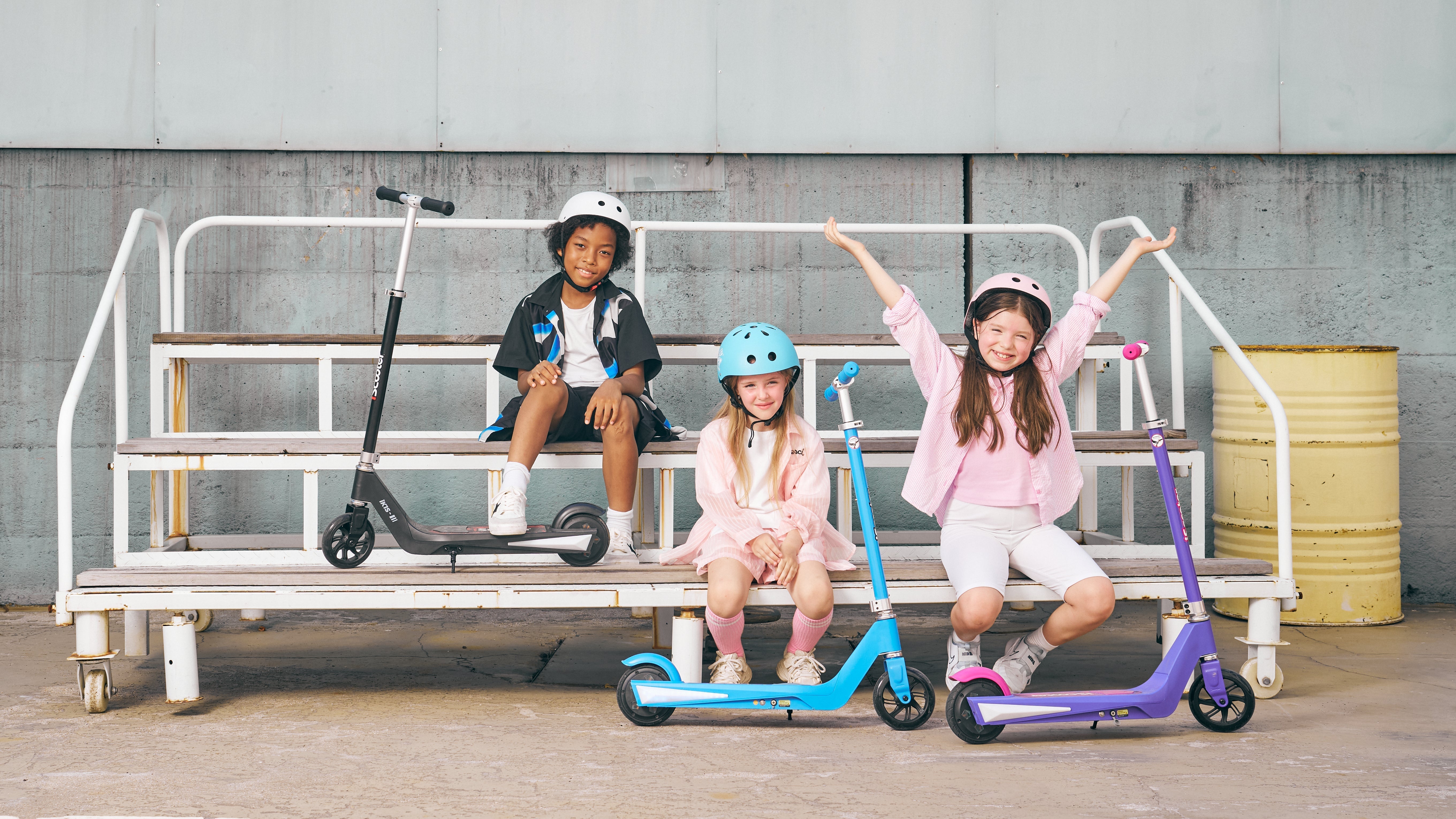
Shopping for an electric scooter for kids can feel overwhelming the first time you do it. Between motor sizes, speed limits, and confusing UK regulations, it's easy to end up more confused than when you started. But here's the good news: once you understand a handful of key factors, choosing the right scooter for your child becomes a lot simpler.
This guide walks you through everything a parent actually needs to know before buying. From age recommendations to legal riding zones so you can make a confident, informed decision.
Electric Scooters for Kids: What Age Is Appropriate?
There's no single "correct" age to buy your child their first electric scooter, but most manufacturers design their children's electric scooter models around three broad age brackets: 3–7, 8–12, and 13+. Younger children generally do better on three-wheel models with lower top speeds, since the extra wheel gives them stability while they're still building balance and coordination.
By around age 8, most kids have the motor skills and judgment to handle a two-wheel design, though it's worth watching how confident they are on a regular kick scooter first. If they're still wobbly without the motor running, it's probably too soon to add speed into the mix.
A common question parents ask is about electric scooter age 10 models specifically at this age, kids can usually manage a bit more power and a slightly higher top speed than younger riders, but a scooter's suitability still depends more on your individual child's coordination and road awareness than on age alone.
Speed, Power and Load Capacity: What Matters Most for Young Riders
Once you've settled on an age range, the next thing to check is the technical spec sheet and this is where a lot of parents get lost.
Motor power
Determines how quickly a scooter accelerates and how well it handles inclines. For most young riders, a smaller motor in the 100W–150W range is plenty; anything more powerful starts to feel like overkill (and a safety risk) for a child under 12.
Top speed
Is arguably the most important number on the page. Look for a junior electric scooter with an adjustable or capped speed setting, ideally somewhere between 6–10 mph for younger children. Being able to lock the scooter into a lower "beginner mode" gives you peace of mind while your child gets used to the controls.
Load capacity
Is the spec parents overlook most often. Every scooter has a maximum rider weight, and pushing past it isn't just bad for the motor, it also affects braking distance and overall stability. Always check this figure against your child's current weight, and leave some room to grow rather than buying right at the limit.
Battery range
Matters less for safety but more for practicality. A short 3–5 mile range is usually enough for park trips or short rides around the neighbourhood, so there's no need to overspend on a bigger battery than your child will actually use.
Where Can Children Legally Ride an Electric Scooter in the UK?
This is the part of the process that catches most parents off guard: in the UK, privately owned electric scooters (including those designed for kids) cannot legally be ridden on public roads, pavements, cycle lanes, or in most parks. This applies regardless of the rider's age, and it's true even if the scooter has a low top speed or the child is supervised by an adult.
The only place a privately owned e-scooter can legally be ridden is on private land, with the landowner's permission. That means your back garden, a private driveway, or a family member's field is fine, a public pavement outside your house is not.
Government-approved rental e-scooter trials, which operate in select UK cities, are a separate category entirely. Riders must be at least 16 and hold a provisional driving licence, so these schemes aren't relevant to children regardless of how tall or capable they are.
Before you buy, it's worth having a conversation with your child about where riding is actually allowed. A scooter that only gets used in the garden might feel limiting, but it keeps your family on the right side of the law and away from potential fines or confiscation.
Safety Gear Every Parent Should Budget For
A scooter purchase isn't complete without the gear that goes alongside it. Here's what to budget for:
-
Helmet: The obvious starting point. Look for one that's specifically sized for children, with a snug fit and no more than two finger-widths of space above the eyebrows.
-
Elbow and knee pads: These add a meaningful layer of protection, especially while your child is still learning to balance and brake smoothly.
-
Reflective clothing or add-on lights: Worth having if your child will be riding in low-light conditions, even on private land. Visibility accidents are just as common in a driveway at dusk as they are anywhere else.
Many retailers, including iScooter's range of electric scooters, bundle helmets and protective accessories alongside the scooter itself, which can make it easier to kit your child out properly without hunting down each item separately.
Choosing a Scooter That Grows With Your Child
Kids grow fast, and scooters aren't cheap, so it's worth thinking a step or two ahead. Adjustable handlebar height is one of the easiest ways to extend a scooter's usable life. A model that can grow from a 6-year-old's height to a 9-year-old's saves you from buying a replacement in a year or two.
Some brands also offer models with multiple speed settings, so a scooter that starts in a capped "beginner mode" can later be adjusted as your child's confidence and skill improve, rather than being retired the moment they outgrow the lowest setting.
Finally, consider your child's personality as much as their age. A confident, coordinated 7-year-old might be ready for features that would overwhelm a cautious 10-year-old, so don't assume the specs on the box are the final word, trust what you know about your own kid.
FAQs
Is it legal for my child to ride an electric scooter on a public pavement?
No. In the UK, privately owned electric scooters cannot legally be ridden on public pavements, roads, or cycle lanes, regardless of the rider's age. They can only be used on private land with the landowner's permission.
Should my child wear a helmet even though it isn't legally required?
Yes. While helmet use isn't mandated by law for private land riding, it's one of the simplest and most effective ways to prevent serious injury. Treat it as a non-negotiable part of riding, not an optional extra.
How do I check a scooter's weight limit is right for my child?
Check the manufacturer's listed maximum load capacity, then compare it against your child's current weight, leaving some margin rather than buying right at the limit. A scooter running close to its weight cap will have a shorter range, slower acceleration, and longer braking distances.
Share:
Are Electric Scooters Legal in the UK in 2026? A Rider's Guide to Where You Can Actually Ride
Weekend Trails and Everyday Commutes: Why UK Riders Are Choosing Electric Mountain Bikes