
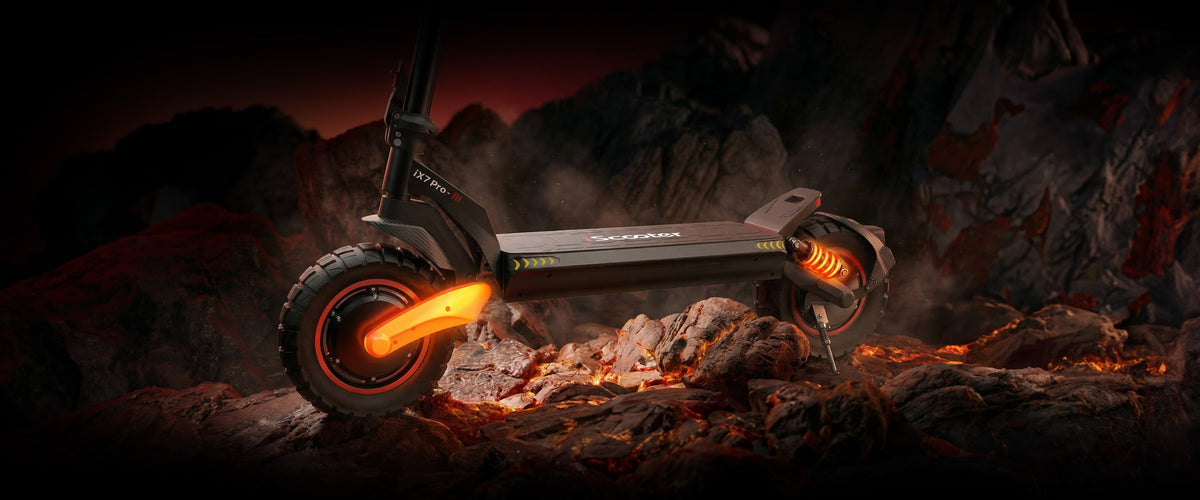
Grass looks friendly until your front wheel slides on a damp patch. Gravel feels fine until the stones start rolling underneath you. If you own an all-terrain electric scooter for adults, or you're about to buy one, a few habits will keep you in control and protect the e-scooter.
This guide covers riding on grass, gravel and mud on private land: what to check first, how to stand, how to brake and how to clean up afterwards. Technique counts for more than any spec sheet, so we'll keep it practical.
Before You Ride: A 60-Second Check for an All-Terrain Electric Scooter for Adults
A quick check before every ride is the cheapest way to avoid a bad day. Run through this routine on your all terrain electric scooter for adults:
-
Tyres: Look for cuts, embedded stones and uneven wear, then check the pressure against the range in your manual.
-
Brakes: Squeeze both levers. They should feel firm and bite evenly, not spongy.
-
Bolts and folding mechanism: Rough ground shakes things loose over time. Make sure the stem, handlebars and latch are tight.
-
Battery: Start with plenty of charge. An e-scooter that cuts out halfway across a field means a long walk back.
-
Deck and grips: Wipe off mud from the last ride so your feet and hands don't slip.
Then check yourself. Wear a helmet, gloves and closed shoes with decent grip. If the ground is new to you, walk it first and look for ditches, hidden holes and slick patches.
Off-road e-scooters are intended for private land, and you need the landowner's permission. If you're unsure where you can legally ride, our guide to where you're allowed to ride an off-road electric scooter in the UK explains it clearly.
Stance, Speed and Braking on Loose Gravel
Loose gravel behaves a bit like a layer of tiny ball bearings. The surface shifts under the tyres, so you need to stay relaxed and smooth.
Stance
Keep your feet shoulder-width apart, knees slightly bent and your weight centred. Stiff legs pass every bump straight into your hands, while soft knees absorb them. Keep a light grip on the bars and look well ahead rather than at your front wheel. The e-scooter tends to follow your eyes.
Speed
Slower is safer on loose stones. Choose a pace that lets you stop comfortably within the distance you can see. Hold a steady throttle, because sudden acceleration can make the rear wheel spin and dig a rut.
Braking
Start earlier than you would on firm ground and squeeze both levers gently and together. Grabbing the rear brake alone is the classic way to lock a wheel and slide. Finish most of your braking in a straight line before a turn, then roll through the corner. Braking hard while turning is where most gravel spills happen.
If the front wheel starts to wander, don't yank the bars. Ease off the throttle, stay loose and let the e-scooter settle.
Wet Grass and Mud: Keeping Traction on a Rough Terrain Electric Scooter
UK weather means you'll meet wet ground often. A rough terrain electric scooter is built for it, but you still need to keep your inputs smooth.
Grass
Dry grass is easy. Damp grass, especially in the morning or under trees, can be slippery, and wet leaves are worse because they hide uneven ground. Keep your speed modest, avoid sharp steering changes and brake gently, well before you need to.
Mud
You need some momentum, but not much. Too little and you'll bog down, too much and you can't react to ruts. Aim for a steady pace, keep your weight centred and follow existing ruts rather than fighting to climb out of them. Fighting a rut is how the front wheel gets thrown sideways. Riding an electric scooter on rough terrain also means knowing your limits, so if the ground is too soft or sticky, stop and walk.
One habit for all wet ground: brake first, steer second, and give every action a little extra room.
Using Suspension and Big Tyres to Your Advantage
Good equipment makes technique easier. Electric scooter all terrain wheels do a lot of the work on bumpy ground. Bigger tyres roll over holes and roots instead of dropping into them, and the air inside acts as the first layer of cushioning.
There are two common setups
A pneumatic tyre uses an inner tube, while a tubeless tyre holds air directly against the rim. Either way, tyre pressure is the setting you can adjust, and it affects both grip and comfort, so always stay within the manufacturer's range.
Suspension is the second layer
It keeps the wheels in contact with the ground over bumps, which helps traction and reduces fatigue. Stay loose, let the e-scooter move under you and don't lock your elbows.
As an example, the iX5S off-road electric scooter lists 11" pneumatic off-road tyres with front and rear suspension. The iX7Pro off-road electric scooter lists 10" tubeless tyres with dual suspension. To compare setups, browse our full range of all terrain off road electric scooters.
Good tyres only help if you look after them. Our guide on how to look after off-road electric scooter tyres covers pressure checks and wear in more detail.
After the Ride: Quick Clean-Down
Mud dries hard and hides problems, so five minutes after a ride saves effort later.
-
Knock off the bulk. Use a soft brush or your hands to clear clumps from the deck, wheels and brake areas.
-
Wipe, don't blast. Use a damp cloth on the frame and deck. Keep pressure washers away from the motor, bearings and electrical parts, and check your manual's water-resistance guidance first.
-
Inspect the tyres. Look for cuts and stones lodged in the tread.
-
Check the brakes. Grit around the levers and discs can stop them moving freely.
-
Dry and store. Keep the e-scooter somewhere dry and charge it as the manual advises.
Ride Smoothly, Stay in Control
Riding all terrain electric scooters for adults comes down to a few things: a quick check before you start, a relaxed stance, early and gentle braking, a steady pace in wet conditions and a proper clean afterwards. None of it is complicated, but together it means better grip, fewer slips and an e-scooter that lasts longer.
Stay on private land with permission, and wear your protective gear every time. If you're still deciding which e-scooter suits your ground, take a look at our off-road electric scooter range and pick the setup that fits the terrain you ride most.
FAQs
What tyre pressure works best on loose gravel versus wet grass?
There's no single answer, because it depends on your e-scooter, tyre and rider weight. Start with the range printed on the tyre sidewall or in the manual, and check whether the manufacturer gives guidance for soft versus firm ground. Never go below the minimum or above the maximum, and re-check pressure regularly.
How do you stop an electric scooter skidding on wet leaves or mud?
Smooth inputs are the answer. Slow down before slippery patches, brake gently with both levers and avoid braking while turning. Keep your knees bent, your weight centred and your throttle steady. If the ground feels too slick to trust, get off and walk through it.
Is it OK to ride an off-road scooter through shallow puddles after rain?
That depends on your e-scooter's water-resistance rating, so check the manual first. Even if shallow water is fine, avoid deep puddles, because you can't see what's underneath and water can reach electrical parts. Afterwards, wipe the e-scooter down and check that the brakes still respond properly.
Share:
Will Private Electric Scooters Become Legal in the UK? What's Being Proposed